We use cookies to make your experience better. To comply with the new e-Privacy directive, we need to ask for your consent to set the cookies. Learn more.

Streamline Warehouse Permitting With Modular Loading Ramps
October 28, 2026
|
Categories: Blogs, Ergonomics, Manufacturing, Material Handling, Logistics
Applying for a commercial loading dock permit can be a lengthy process. If you also need to apply for a commercial building permit to install a ramp, you might find yourself waiting anywhere from four weeks to six months for approval.
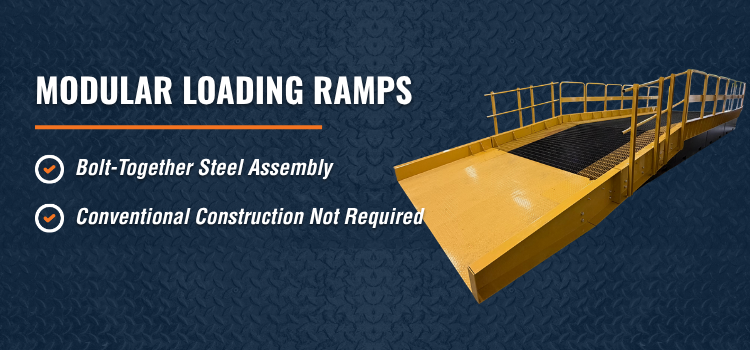
The Modular Loading Dock Platform provides an alternative. Designed for temporary or semi-permanent installation, it’s adjustable and compatible with existing dock infrastructure. Thanks to its bolt-together steel assembly, it doesn’t require conventional construction — which means that in most cases, you won’t need separate building permits to put it to work.
Why Modular Loading Ramps (Generally) Require Less Red Tape
Permitting requirements vary from city to city, but loading dock ramps generally require a permit if they’re permanently attached or if they cannot be removed without altering the building’s structure.
Permanence is a factor because structural engineers study factors like weathering and load transference. When ramps are a part of the building, they need to meet certain standards in order to be used safely over long periods of time.
Temporary ramps don’t have those requirements, but that’s not due to a regulatory oversight. When ramps aren’t permanent, they can be replaced or repaired at the first sign of damage. This doesn’t mean that they’re any less dependable, durable, or safe — they’re just not part of the actual building, so building codes don’t apply.
We don’t want to give the impression that permits are never necessary, and this article is not intended as legal advice. You’ll need to research your area’s building codes to ensure compliance.
But BHS Modular Loading Dock Platforms can greatly simplify loading dock expansion in many cases. There are just a few important considerations to remember:
- The height and length of the ramp might impact permitting requirements (even if it’s not intended as a permanent building modification).
- Temporary ramps still need safety barriers and guardrails.
- Lift truck drivers must still follow OSHA’s guidelines for driving forklifts on ramps and grades.
- Ramps may still require safety signage.
We designed our Modular Loading Dock Platforms for OSHA compliance and for practical functionality. Forklifts can navigate easily, and integrated steel supports are fully adjustable, so you can safely install the ramps without pouring concrete (and permanently modifying your building).
Modular Ramps Provide Flexibility When Expanding Operations
Modular equipment makes your operation more flexible. You can temporarily install new ramps to handle a seasonal increase in work, then remove those ramps when demand decreases. You can also leave a Modular Loading Dock Platform in a semi-permanent location without sacrificing reliability.
Our engineering team can match your Modular Loading Dock Platform to the needs of your facility. For example, your dock platform could include multiple loading positions, as well as any platform size, weight capacity, or loading height. We can also integrate enclosures, dock levelers, or Safety Barriers and Guardrails as needed. All Modular Loading Dock Platforms feature bolt-together assembly for quick installation.
Expand Your Business’s Capacity Without Permanent Modifications
BHS provides the material handling equipment and structural support that your operation needs to grow. All of our products are proudly designed and manufactured in the USA, and our engineering team works closely with dealers and end users to match any use case.
Find the solutions your business needs to improve throughput, expand capacity, and see real results. Fill out a custom manufacturing request form or call the BHS Sales Team at 1.800.BHS.9500.
