We use cookies to make your experience better. To comply with the new e-Privacy directive, we need to ask for your consent to set the cookies. Learn more.

Pick, Pack, and Ship: Warehouse Optimization Strategies
July 29, 2025
|
Categories: Blogs, Ergonomics, Manufacturing, OSHA, Material Handling, Efficiency, Safety
As of 2023, the U.S. had over 21,000 warehouses — and that number is likely much higher now, as the domestic order fulfillment market continues to grow rapidly. The average warehouse size has also increased dramatically, ballooning from 65,000 square feet in 2000 to around 210,000 square feet in early 2024.
Consumer expectations have also grown. About 60% of consumers expect same- or next-day shipping, which puts substantial pressure on supply chains. People expect a greater variety of products, delivered promptly and at low cost.
And while we could quote statistics all day, the fact is that warehouse managers are already aware that the industry is at a critical juncture. Today, efficient pick, pack, and ship operations are no longer a competitive advantage: They’re a fundamental requirement for survival and success.
As a leading provider of material handling equipment for logistics providers, we’re invested (quite literally) in helping the warehouse and storage industry succeed. In this article, we’ll discuss the three core stages of order fulfillment — pick, pack, and ship — and inventory management strategies that can make the process more efficient.
To learn how BHS engineers can help you find solutions for your warehouse, call 1.800.BHS.9500 to speak with a member of our team or request more info online.
Optimizing the Order Picking Process: The Engine of Fulfillment
Order picking efficiency directly affects throughput and the responsiveness of your entire order fulfillment process. Order picking is highly dependent on labor — even in warehouses with a high degree of automation — which makes it highly prone to error.
Consider the following:
- Order picking typically accounts for about 55% of all warehouse operating costs, per the Georgia Institute of Technology.
- Picking travel time is responsible for the highest proportion of those costs.
- Per a survey from Peerless Research Group (PRG), 59% of warehouses report difficulties in attracting and retaining their hourly workforce.
- 36% of facilities grapple with the limitations of outdated storage, picking, or material handling equipment.
- The U.S. Bureau of Labor Statistics reported a 3.2% year-over-year decrease in warehousing and storage employment as of April 2024.
Warehouses have trouble finding workers, and the churn contributes to high operating costs, excessive travel time, and low throughput — along with preventable fulfillment errors.
But those challenges point to opportunities: If you’re aware that your operation needs to be more efficient, there’s an excellent chance that you can start seeing results by optimizing your order picking process.
An ergonomic approach can support retention while directly improving efficiency on the floor. Here are actionable tips to help you get started.
1. Streamline Warehouse Layout and Product Slotting
A disorganized warehouse means excessive travel time. Begin by analyzing your current warehouse layout:
- Ensure a logical flow from receiving to storage, then to picking, packing, and shipping areas to minimize backtracking.
- Generate pick lists or pick-and-pack documentation to match fulfillment center layout and integrate with broader inventory management systems or warehouse management systems.
- Implement an ABC analysis, where high-velocity "A" items are stored in the most accessible locations, closest to packing and shipping stations, to drastically cut down on picker movement.
- Regularly review and adjust your slotting strategy to adapt to changing demand patterns.
- Think vertically. Maximizing vertical space with appropriate racking not only increases storage density but also makes more SKUs accessible within a condensed footprint, further reducing travel.
Products to Consider
BHS Industrial Shelving and Racking systems provide the customizable and durable framework needed for effective slotting strategies. For forward pick areas, specialized BHS Pick Racks with angled shelves can improve item visibility and ergonomic access, speeding up retrieval.
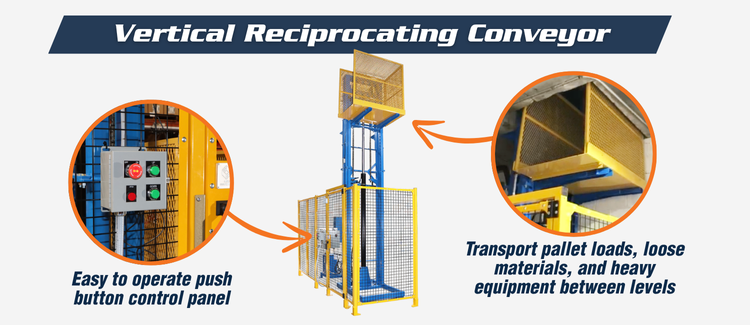
The BHS Vertical Reciprocating Conveyor (VRC) is a custom-engineered material lift designed to safely transport goods, pallet loads, and heavy equipment between different facility levels.
BHS VRCs are instrumental in helping warehouses and industrial facilities maximize their operational footprint and efficiently utilize valuable vertical space. With clean hydraulic operation, VRCs are tailored to your warehouse’s specific capacity and height requirements.
Learn more: When to Install a VRC Freight Lift at Your Facility
2. Implement Efficient Picking Methodologies
Once your layout is optimized, select picking methods that best suit your order profiles and volume.
- Single Order or Discrete Picking: Pickers complete one full order before starting another. While straightforward, this method leads to considerable travel if items are spread out.
- Batch Picking: Operators collect items for several orders in a single pass through the warehouse. This reduces travel, but requires items to be sorted into individual orders later.
- Zone Picking: The warehouse is divided into zones, and pickers work only within their assigned area, becoming experts there. Orders move between zones or are consolidated centrally.
- Wave Picking: Orders are released to the floor in scheduled groups ("waves") throughout the day.
- Cluster Picking: Pickers gather items for multiple orders simultaneously, sorting them directly into separate order containers during the pick.
- Goods-to-Person (GTP) Picking: Automated systems deliver items directly to a stationary picker.
Products to Consider:
For various picking strategies, BHS Order Picker Carts (OPC) are an invaluable addition. The OPC features an ergonomic, highly maneuverable design, which allows for easy separation of items for different orders during the picking tour.
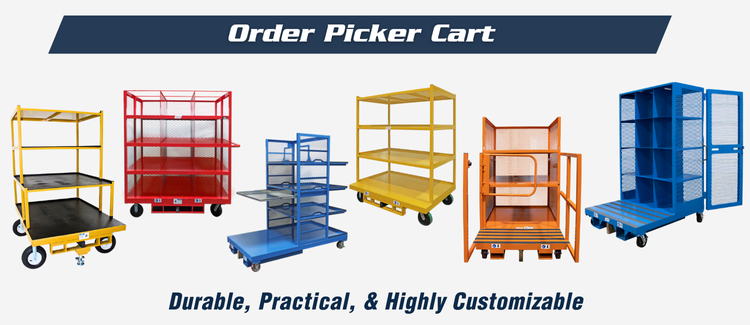
Order picking equipment should be implemented with organized industrial shelving and pick racks, which might include gravity feeds or roller attachments to keep products moving.
Learn more about optimizing your picking strategies: Warehouse Picking Strategies and Equipment
3. Prioritize Ergonomics and Worker Support
With personnel costs forming the largest portion of warehouse expenses and retention being a major challenge, focusing on worker well-being is not just a matter of compliance but a direct path to efficiency. Ergonomically designed equipment reduces physical strain, which can lead to fewer errors, lower injury rates, and improved morale and productivity.
When pickers can access items comfortably and safely, especially at height, their performance improves — and turnover becomes less of a factor.
Products to Consider
All BHS equipment is designed with ergonomics in mind. From Order Picking Carts (OPC) to Utility & Service Carts (USC Series), we prioritize features like comfortable handle heights and smooth-rolling casters to minimize operator fatigue.
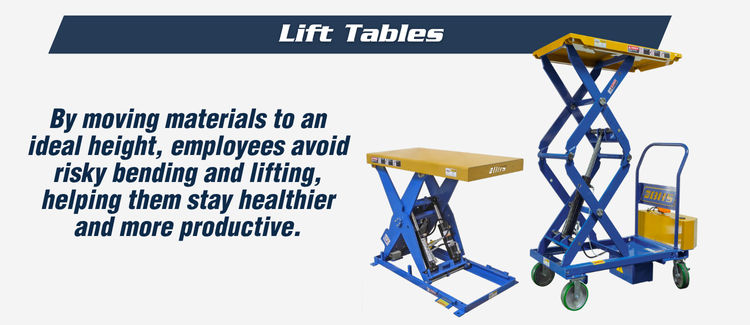
That commitment extends to solutions like Order Picker Platforms (OPP), which convert order picker trucks to OSHA-compliant elevated platforms, and Lift Tables & Pallet Positioners, which keep loads at steady heights during product assembly, order picking, and pallet loading.
Learn more: Warehouse Picking Systems: 6 Strategies and the Tools That Support Them
The Packing Process: Balancing Protection, Cost, and Sustainability
The packing stage is far more than just putting items in a box; it's a critical control point for cutting costs and improving customer satisfaction.
Poor packing can lead to product damage during transit, incurring costs for returns, replacements, and eroding customer trust. The packing area itself can become a bottleneck, and addressing these hurdles requires an intelligent approach to station design, material handling, and process optimization.
1. Design Ergonomic and Efficient Packing Stations
Packing workstations should minimize physical strain and maximize efficiency by keeping tools and materials within easy reach. Adjustable height work surfaces are crucial to accommodate different workers and tasks, allowing them to operate within their ergonomic power zone. Well-organized storage for boxes, void fill, labels, and tools at each station prevents clutter and wasted motion.
2. Optimize Material Flow and Handling at the Station
Efficiently supplying packing stations and handling items during the packing process is vital. For heavier items, assistive lifting and positioning devices can prevent injuries and reduce handling time. Ensuring that packers have all necessary materials readily available minimizes downtime and movement away from the station.
Products to Consider: BHS Lift Tables (such as the LT, LTL, and LTD Series) can be integrated into packing stations to help workers safely lift, lower, or tilt heavy items or bulk containers, reducing physical strain and improving access. Tilt Tables keep loads at the ideal orientation for each worker.
The BHS Shipping & Receiving Desk (SRD) allows for manual or powered height adjustments and can be customized with accessories like shelving, drawers, and power strips to create highly efficient and ergonomic packing stations.
Adjustable Packing Desks (APD) provide powerful ergonomic benefits for order packers and staff assigned to assembly, product sorting, and similar tasks.
The Shipping Process: Consistency and Efficiency
The shipping stage is where all preceding efforts in picking and packing come together. It's the last opportunity to ensure accuracy and efficiency before an order leaves your control. Smooth, well-managed shipping operations are essential for meeting customer delivery expectations and controlling significant costs.
Shipping is often the most expensive part of the order fulfillment journey, with last-mile delivery alone accounting for 53% of total shipping costs. Congestion at shipping docks is another common issue, with receiving and shipping areas frequently cited as bottlenecks.
Ensuring order accuracy before dispatch — correct items, shipping labels, packing slips, and shipping method — will avoid costly errors (and dissatisfied customers). Strategic improvements in how orders are staged, managed at the dock, and loaded can yield significant time and cost savings.
1. Enhance Staging Area Organization and Safety
A well-organized outbound staging area is critical for efficient loading and minimizing errors. Clearly demarcated lanes for different carriers or routes, proper signage, and safe access for personnel and equipment can significantly improve workflow and protect the integrity of the outbound shipments.
2. Facilitate Efficient and Safe Loading/Unloading
The interface between your warehouse and the carrier's trailer is a critical point. Bridging the gap safely and efficiently is essential for quick trailer turnaround. Equipping your team with the right tools to move goods into trailers not only speeds up the process but also reduces the risk of injury and product damage.
Products to Consider
BHS Industrial Shelving can be used in staging areas to organize outbound orders awaiting carrier pickup. For safety and delineation, BHS Structural Barrier Rails provide robust protection for personnel and define clear pathways for equipment and foot traffic near busy shipping docks.
BHS Powered Dock Gates provide essential fall protection at active shipping bays. Its push-button operation ensures personnel are safeguarded during the loading of vehicles without impeding the flow of outbound goods.
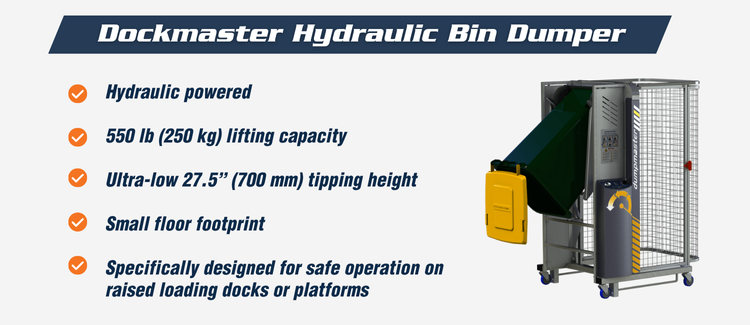
The BHS Dockmaster Hydraulic Bin Dumper streamlines the handling of materials at the dock — whether it's consolidating waste from packing operations or managing bulk goods for dispatch. That reduces manual effort and prepares outbound areas more efficiently, directly supporting smoother shipping schedules.
For fast, secure loading, BHS provides a range of Dock Ramps & Platforms. These robust solutions include Yard Ramps, which create essential loading access where fixed docks may be unavailable, along with Dock Boards and Plates that securely bridge the gap to trailers.
Partner with BHS for Optimized Pick, Pack, and Ship Processes
Optimizing each stage of the pick, pack, and ship process isn’t just about incremental improvements; it’s about transforming your fulfillment operation into a streamlined, cost-effective, and reliable engine for growth.
At BHS, we understand that true, sustainable optimization often requires more than standard solutions. Our dedicated team of engineers works directly with clients to design and build application-specific material handling equipment. That approach allows for exceptional lead times and superior quality control, ensuring you get the precise solutions you need to run an efficient warehouse.
To learn how BHS engineers can help you find or create the ideal solutions for your warehouse, call 1.800.BHS.9500 to speak with a member of our team today or request more info online.
