We use cookies to make your experience better. To comply with the new e-Privacy directive, we need to ask for your consent to set the cookies. Learn more.

Reel Jack Stands and How to Handle Cable Reels Without Them
January 15, 2020
|
Categories: Blogs, Ergonomics, Construction, Efficiency, Electrical, Safety
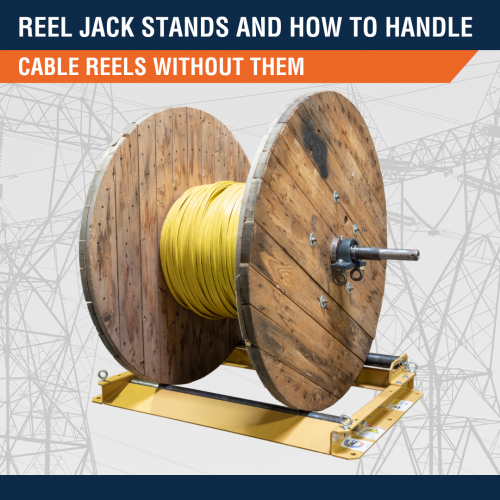
Wire jack stands are the most common platforms for pulling wire and cable, and for good reason. They’re relatively economical, easy enough to handle, and they usually get the job done. Electricians position stands beneath the reel. They use a ratchet mechanism to jack the reel hooks upward, lifting the reel bar off the ground. Then they pull.
But in this era of technological revolution, is this system still the best? Is it the safest, the most efficient? Let's examine the problems associated with jack stands before looking into heavy duty cable reel stands and reel handling equipment that may someday render the jack stand obsolete.
Problems with Wire Jack Stands
A pair of jack-powered cable reel stands can certainly support cable reels and cable payout, but several things can go wrong during the process:
1. Unidirectional Pulls
To pull cable with a pair of reel jack stands, electrical contractors have to ensure the stands are facing the right direction. That requires a complex and potentially unsafe series of actions every time the cable pull changes directions. Users must lower the reel to the ground, rotate both jack stands, and re-jack the reel for clearance. This takes time and presents ergonomic hazards.
2. Instability
Cable jack stands can become unstable on uneven ground. Given the great weight of fully loaded cable reels, any instability is a serious safety hazard. Heavy duty stands might have tremendous load capacities, but without stability, they can't function as safe heavy duty reel lifters.
3. Pressure on Reel Flanges
Jack stands lift large cable reels from ground-level, requiring reel flanges to bear the weight of the load until they’re lifted. Particularly for wooden reels, this can cause damage, splinters, exposure to debris, and loose nails or staples. Damaged reels can catch at conductors during the pull, damaging them or stopping the pull in its tracks.
4. Proprietary Spindles
In order to prevent lateral motion, reel spindles are designed with divots at the ends — but not all these reel bar ends fit into every ratchet reel stand. Many models require spindles that are built specifically to work with them, creating a potential safety hazard when electricians don’t have the right spindles on hand.
Despite these drawbacks, jack-style reel stands support cable installation most of the time. When outfitted with quick-adjust heads, they operate efficiently, and support quick height adjustment. Roller bearing spindle mounts ensure smooth delivery of wire and cable.
But what if there were a better way to handle cable reels at the job site?
Alternatives to Reel Jack Stands
Several technologies allow electricians to complete cable payout jobs without using jack stands, from smaller jobs to full-scale installations. These include:
-
Reel roller platforms. Dyna Reel Platforms feature low-built steel rollers; place reels onto this single platform roller for smooth, low-cost cable pulls.
-
Reel roller forklift attachments. Fix a Dyna Reel Platform Attachment to lift truck forks for a totally portable, cable-dispensing solution. Forklifts are easy to rotate, supporting wire pulling in any direction. Sealed bearings and adjustable rollers ensure safe use, regardless of the reel's product dimensions. Fork pockets create a seamless connection with lift trucks.
-
Parallel Reel Payout Wagons. Steel reels mounted on Parallel Reel Payout Wagons allow users to pay out cable in any direction, from any point in the job site. Fork pockets and heavy duty casters provide mobility.
-
Parallel Reel Payout Trailers. For large-scale cable pulls, choose a Parallel Reel Payout Trailer. These trailers feature Parallel Reel Payouts on rotating bases, allowing electricians to drop off the trailer at the job site and pull cable of any type in any direction.
Regardless of which cable handling solution works for a given contractor, it’s always a good idea to reduce the number of removals of reels from stands as much as possible. Spool Winding Trolleys allow users to spool cable reels on existing stands or Parallel Reel Payout units.
This reel-handling equipment promotes jobsite safety by ensuring ergonomic use of wire and cable reels. They're specialized material handling solutions
With heavy duty cable reel stands designed for large cable spools, there’s a better option than relying on wire jack stands alone.
References:
DeVeau, Mark. “Breaking Down the Basics of Cable Pulling.” ECMWeb. Endeavor Business Media, LLC, 24 Jan. 2011.
