We use cookies to make your experience better. To comply with the new e-Privacy directive, we need to ask for your consent to set the cookies. Learn more.

Installing Electrical Cable Tray Systems: Material Handling Solutions
May 27, 2026
|
Categories: Blogs, Ergonomics, Material Handling, Construction, Efficiency
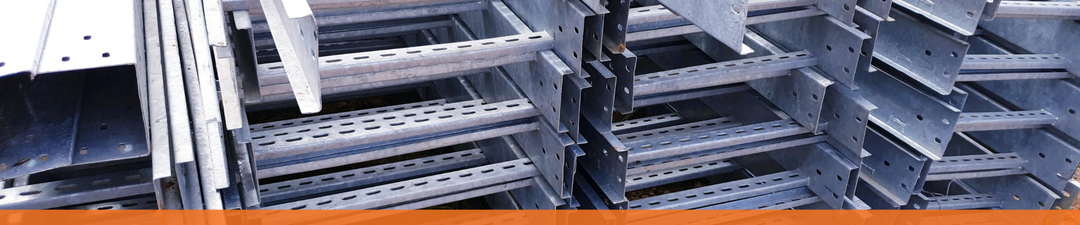
Modern industrial and commercial facilities have complex wiring needs, and complex installations require appropriate pathways. Purpose-built electrical cable tray systems provide a dedicated, open-air pathway for power, data, and communication cables.
Unlike conduit, cable tray systems offer superior heat dissipation and high levels of accessibility, allowing electrical contractors to perform maintenance or add new circuits without dismantling existing infrastructure.
But the primary challenge facing project managers today is not the selection of the tray itself — it’s the massive logistical burden of its installation.
On a large-scale project, the sheer volume of metal components creates a bottleneck. Moving thousands of linear feet of heavy, awkwardly shaped tray sections through a job site is a labor-intensive process with inherent safety risks.
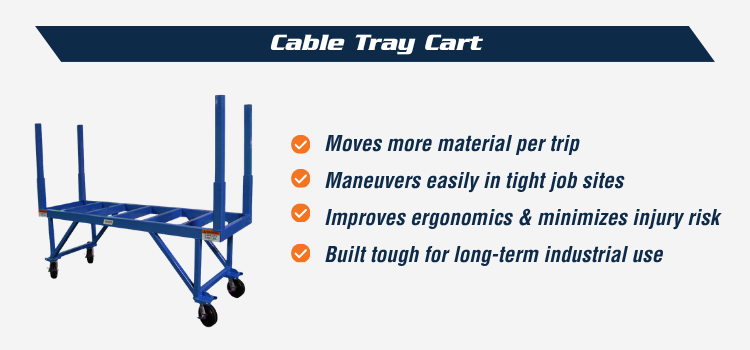
When installers are forced to rely on makeshift transport solutions or manual effort, the project isn’t efficient. To overcome these logistical hurdles, you can select material handling equipment specifically engineered for electrical cable tray systems. Today, we’ll showcase our purpose-built solution: the BHS Cable Tray Cart.
Electrical Cable Tray Systems Are Now Essential Infrastructure
Modern industrial facilities require miles of tray to support multi-tiered cable runs. The scale of these projects introduces some management issues:
- Most tray systems are manufactured in standard lengths of 10 or 20 feet, requiring significant storage footprints on the job site.
- High-capacity ladder trays are often constructed from heavy-gauge steel or aluminum. Manual transport isn’t an option.
- Wire mesh systems are lighter, but they’re shipped in bulk quantities that require high-density stacking for efficient delivery.
- Project timelines in sectors like cloud computing are extremely aggressive. There’s no room for delays caused by material handling bottlenecks.
In a hyperscale data center, for example, a single facility may require hundreds of miles of tray. If a team of electricians spends a hefty percentage of their time simply moving materials from a central staging area to the point of installation, the lost labor costs can reach hundreds of thousands of dollars over the life of the project.
The Impact of Installation Challenges on Profitability
When contractors attempt to install electrical cable tray systems without dedicated material handling tools, they encounter three major points of friction.
The first is the ergonomic risk associated with repetitive manual handling. According to NIOSH, manual material handling is a leading contributor to musculoskeletal disorders, which account for roughly one-third of all workplace injuries in the construction sector. Lifting heavy tray sections from floor level or reaching over high-sided makeshift carts puts unnecessary strain on the back and shoulders.
The second challenge is the management of packaging waste. Cable tray is shipped in cardboard boxes or secured with heavy plastic strapping. In a high-volume installation, packaging quickly becomes debris. If workers don’t have a way to organize and transport waste alongside their new materials, the job site becomes cluttered, leading to trip hazards (and potential violations of OSHA standards for walking-working surfaces).
Finally, there’s the issue of productivity loss. Without a high-capacity transport solution, workers are forced to make frequent trips to the storage area. That’s dead time.
Electrical Cable Tray Carts: Key Features
To address these issues, look for electrical cable tray systems with these features:
High-Precision Maneuverability
Almost by definition, job sites are congested. A cart with a poor turning radius or low-quality wheels will struggle to reach the point of installation — forcing workers to carry the material the final fifty or one hundred feet.
- Swiveling and Fixed Casters: Look for a caster configuration that includes a mix of fixed and swiveling wheels for maximum steering control.
- Phenolic Casters: Phenolic casters provide the high weight capacity needed for metal tray without marking finished floors.
- Low-Profile Wheelbase: A low-profile wheelbase allows the cart to be pushed easily through standard doorway frames.
Effective maneuverability ensures that the material is always exactly where it needs to be. The BHS Cable Tray Cart is engineered with this precision in mind. It’s capable of navigating the narrow aisles of a server room or the busy corridors of a hospital expansion with ease, even when operated at max capacity by a single person.
Vertical Capacity and Load Containment
Given the miles of tray required for modern infrastructure, your handling equipment must maximize vertical space to increase trip density. However, stacking heavy metal sections creates a safety risk if the load is not properly secured.
The BHS Cable Tray Cart balances high-volume storage with total load security:
- High-Volume Restraint Posts: Tall, heavy-duty restraint posts create a secure pocket for tray sections or boxes, preventing material from shifting during transit.
- 33-Inch Vertical Clearance: A generous vertical capacity allows for the transport of multiple layers of material in a single trip, reducing the total number of runs required from the staging area.
- Stable Center of Gravity: The low-profile design maintains a stable center of gravity to prevent toppling when the cart moves over uneven job site surfaces or debris.
- Slim-Profile Frame: The load stays contained within the width of the cart frame, ensuring the unit can pass through narrow gaps without snagging on walls or sensitive electrical equipment.
Welded Steel Engineering and Durability
Industrial environments are notoriously hard on equipment. A cart built with a bolted frame will eventually vibrate loose or warp under the weight of heavy cable tray.
The BHS Cable Tray Cart features:
- Fully Welded Steel Frame: Bolted assemblies can shear or loosen over time. The Cable Tray Cart features an all-steel frame with fully welded joints for maximum structural integrity.
- Industrial Powder Coat Finish: The durable powder coat finish provides superior resistance to chemicals, moisture, and mechanical abrasions.
- Heavy-Duty Weight Rating: Engineered to handle the dense loads associated with steel ladder trays.
- Made in the USA: Every cart is designed and manufactured in the United States to ensure high quality-control standards and reliable lead times.
Ergonomic Access and Adaptive Design
The best material handling solutions act as mobile workstations that adapt to the needs of the installer. The BHS Cable Tray Cart prioritizes ergonomic access to reduce the risk of strain.
- Removable Restraint Posts: Installers can remove the side restraint posts as the load decreases, providing open-side access to the remaining tray and reducing the need for awkward lifting.
- Optimal Deck Height: The cart deck keeps the first layer of materials at a level that eliminates deep bending, protecting the operator’s lower back during the initial stages of unloading.
- Integrated Push Handles: Strategically placed handles allow for a natural grip and an upright pushing posture.
- Consolidated Transport: The open design allows for the simultaneous transport of tools and small components alongside the tray sections.
All of these ergonomic features align with the NIOSH Ergonomic Guidelines for Manual Material Handling. By reducing the number of high-risk movements an electrician performs daily, the BHS Cable Tray Cart helps improve retention and decreases the costs associated with workers' compensation claims.
Stakeholder Value for the Entire Supply Chain
Optimized material handling provides value to every stakeholder in the process, from the initial delivery to the final inspection.
- Value-Added Wholesaling: Electrical wholesalers can use cable tray carts to ship bulk orders as a pre-staged service, delivering materials that are already organized and ready for the floor.
- Mobile Job Site Storage: Contractors can use the carts as mobile racks, eliminating the need for large, centralized storage areas that clutter the workspace.
- Long-Term Utility: Facilities managers can retain the equipment for ongoing maintenance and future cable pulls.
When a wholesaler delivers cable trays on a specialized electrical cart, they provide a turnkey solution that saves the contractor hours of sorting and staging.
Material Handling Equipment for Every Installation
The efficiency of your electrical cable tray systems installation is defined by the tools you provide to your team. By moving away from manual handling and makeshift transport and towards engineered solutions like the BHS Cable Tray Cart, you ensure that your project is completed on time, under budget, and without injury.
Ready to outfit your operation?
Contact the BHS sales team at 1.800.BHS.9500 or visit our contact page to learn more about our material handling solutions and custom equipment.
