We use cookies to make your experience better. To comply with the new e-Privacy directive, we need to ask for your consent to set the cookies. Learn more.

What Is Warehouse Cube Utilization?
July 16, 2025
|
Categories: Blogs, Ergonomics, Manufacturing, OSHA, Material Handling, Efficiency
Warehouse cube utilization is a simple metric that expresses how effectively or ineffectively a warehouse uses its total available storage capacity. If you want to run your fulfillment center or warehouse facility efficiently, you need to know this number — and ideally, you’ll be able to shift that number as needed to react to market dynamics.
The basic formula for warehouse cube utilization is straightforward:
Cube Utilization (%) = (Space Used / Maximum Space Available) x 100
By expressing utilization as a percentage, we get an intuitive, easy-to-track metric. If your current storage utilization is only 50%, you want to push that towards 70-85% (not 100% — we’ll discuss why in a moment).
Improving warehouse utilization can allow you to postpone (or eliminate) investments in new physical infrastructure or even real estate. It can also help to guide your material handling equipment (MHE) purchases — but it’s not just about “filling more space.” Here’s why.
Visit our Inside the Warehouse page to see how the right MHE can help you build better processes (and maximize throughput).
Warehouse Space Utilization 101: Avoiding Common Mistakes
The cube use rate is just one way to measure overall warehouse space utilization. Other measures of warehouse storage capacity use include:
-
Area or floor utilization, which looks at the two-dimensional storage footprint relative to the total size of the building;
-
Location, slot, or bin utilization rate, which counts full vs. empty storage slots, and;
-
Warehouse fill rate, which measures the percentage of orders you can ship with your current stock.
Cube storage use rate is a particularly powerful measurement of warehouse space utilization, however, because it provides a big-picture overview of your operation’s profitability. In warehousing, storage utilization translates directly into income.
With that in mind, you might think a cube utilization rate of 100% seems like a good idea. You’re using every bit of available storage, so you’re not wasting any space. Great news, right?
But as most warehouse managers know, a completely full warehouse isn’t a very efficient warehouse. With most types of product, 100% warehouse cube utilization means that it takes more time to access specific stock, impacting order fulfillment and overall fulfillment speed. That means order pickers have less room to maneuver, inventory flow slows down, and there’s more congestion on the floor, ultimately affecting customer satisfaction.
So, how can you find a rate that works for your operation? Start by studying these key factors:
- Inventory Characteristics: If you’ve got extremely fragile inventory, a lower cube utilization rate will typically mean less lost product. Other physical attributes can also make a difference: size, shape, weight, and stackability are all important.
- Inventory Turnover Rates: Facilities with high-velocity items that move quickly may be able to sustain higher utilization rates than those with slow-moving goods. For products with high turnover but no expiration dates, a 60% ratio might be ideal.
- Number of SKUs: A high number of SKUs can complicate storage, which means setting a lower utilization target.
- Expiration Dates (FIFO Requirements): Products with expiration dates, such as food or pharmaceuticals, often require specific storage and picking strategies (First-In, First-Out) that can impact space utilization. A 50% utilization ratio might be a good target for products with shorter shelf lives.
- Seasonality and Demand Fluctuations: Warehouses experiencing significant seasonal peaks or unpredictable demand surges need to maintain a degree of spare capacity to absorb these fluctuations.
If none of these factors are particularly applicable to your business — you’ve got fairly robust, uniform products that don’t expire and don’t require special storage — you might set your goal within that 75-80% range that we mentioned earlier in this article.
Otherwise, you’ll have to make adjustments. Some businesses set their goals at under 50%, and that doesn’t necessarily mean that those warehouses are less efficient. They’re simply making appropriate accommodations for their inventory.
What’s important is that you lay the groundwork for setting smart goals:
- Make sure you’re looking at the space in actual storage areas when making your calculations. You’re not using the total square footage of the warehouse in the math — unless you’re planning on storing products in bathrooms and offices (in which case, you probably need to upgrade to a bigger warehouse!).
- Make improvements gradually. You’ll need to make allowances for some operational flexibility. You can always improve utilization over time, but starting with a congested warehouse won’t give you room for improvement (quite literally).
- Schedule regular audits. If you’re not measuring cube utilization, you can’t meaningfully improve it.

Related: Warehouse Automation: Is a Dark Warehouse Really Possible?
Improving Warehouse Cube Utilization: 5 Basic Strategies
We want to note here that this is an introductory article to cube utilization. Our goal is to help managers start thinking of ways to make improvements to lower operational costs, which is a major undertaking across the entire supply chain with dozens of factors to consider — and with the right material handling partner, that’s a much easier process.
With that said, these simple strategies can provide quick results in unoptimized warehouses. That can help you make smart purchasing decisions to streamline your facility.
1. Optimize Layout
The simplest (though not necessarily easiest) optimization strategy is to revise the actual layout of your facility. Review aisle widths, material flow, and work zones. Reducing aisle widths (with suitable accommodations for your MHE) can save 15-20% space.

2. Embrace Vertical Space
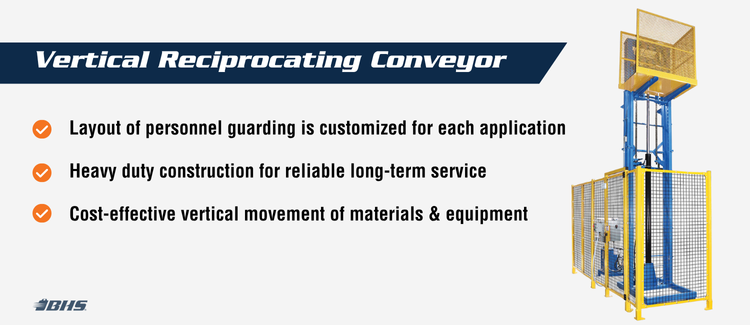
Depending on your stock, you may be able to expand vertical storage capacity by using taller pallet racking, vertical storage systems, mezzanines, and vertical reciprocating conveyors (VRCs) to make the most of vertical space. Since you’re moving up, you can recover up to 85% of floor space — provided that your inventory allows for vertical space utilization.
3. Use Smart Storage Solutions
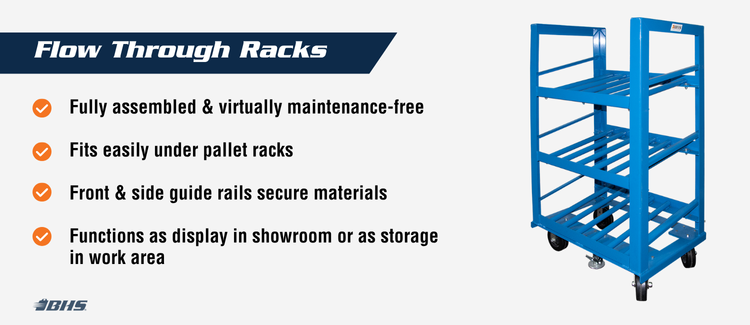
If your inventory isn’t stored in predetermined positions, you’ve got more flexibility. Dynamic (as opposed to fixed) location systems can be highly beneficial for the warehouses that can use them. Consider implementing high-density systems or dynamic shelving such as Flow Through Racks.
4. Adopt More Efficient Processes
Here’s where we get deeper into logistics and inventory management strategy, along with practices that may not be applicable to every facility. You might use cross-docking to minimize demand for storage space — ideal if you’ve got products with predictable demand and rapid turnover. Implementing an effective slotting strategy and warehouse slotting framework could put your high-demand items in more accessible locations, and improvements in your MHE fleet could minimize travel lanes while improving throughput.
5. Measure & Right-Size
Conduct regular audits to keep an eye on your cube utilization rate. That will allow you to engage in demand forecasting and minimize wasted space — without going too far into your built-in allowances.
Find Solutions for Improving Warehouse Throughput
Note that these basic strategies become more effective when they’re implemented at the same time. That’s often essential: If you’re utilizing more vertical space, for example, you’ll probably need to think about your layout in the process. An experienced material handling partner can help you create a truly optimized environment that maximizes capacity and operational effectiveness.
To discover tailored solutions that can enhance your warehouse space utilization and support overall operational efficiency, contact BHS today. Our experts are ready to help you identify and implement the right strategies and material handling equipment for your unique facility.
Request a quote online or call 1.800.BHS.9500 to speak with a member of our team.
